Friday, September 21, 2012
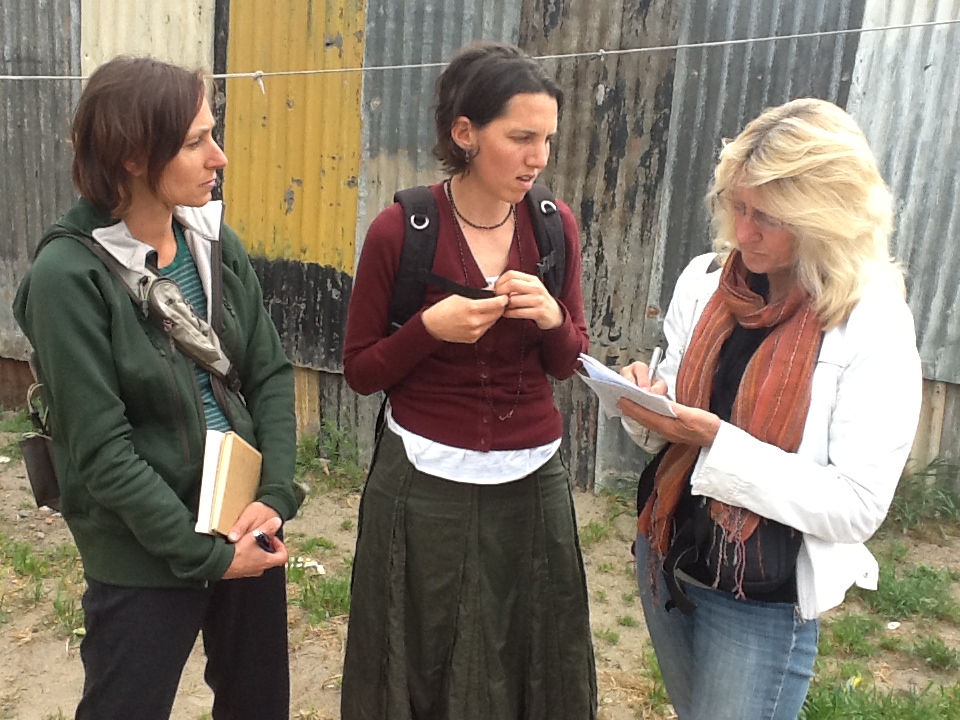
This morning we were picked up by Carly Tanur, Director of
the Mamelani project and set off to see our fourth grassroots project funded by
the Stephen Lewis Foundation (SLF).
Accompanying Carly were the three facilitators of the separate programs
which make up Mamelani – Numvuyo, Thandi and Cleo.
The three programs are Health, Youth Development Program and
Child and Family Support Program.
1.
Health program.
Within this program, Mamelani has workshops for women as well as HIV
Support Groups. They support people with
diabetes, hypertension, HIV/AIDS, TB,
and in general look at the body and the mind and the stresses on
people’s lives. Mamelani looks at
health in a holistic manner and it is difficult to separate each of the parts
from the other.
Their Health Champions Program is new and
looks at how to support women to develop their initiatives themselves. It is a one-year mentoring program to support
resourceful women who are taking the initiative in the area of health. At first 16 women were selected and then
narrowed to 10 who are going through a capacity building program . These women share their ideas and projects
with other women and then go through further training and get assistance to expand
their projects . One of the women runs a
soup kitchen and another runs an after school care program. By helping these women get their projects off
the ground and connecting with other women, it is building capacity within
communities, rather than just handing over resources.
How does Mamelani choose which women to
support in the Health Champions program?
The projects are started entirely by the women themselves. These women have processed the information,
turned it into action and are keen to share their experiences and see how we
can all harness the energy together and help their programs grow.
The tension is this: either you deliver
programs or you fund projects in small ways .
2.
The Youth Development Program focuses on young
people who are coming out of state care – 18 and over. They are not yet independent but not street
youth and they require a lot of support.
3.
The Child and Family Support Program is a small
program focusing on social work in primary schools. They might come from families where there is
substance abuse, HIV/AIDS, etc. and there are poor services for children in
this area.
As we drove to our first stop at a soup kitchen in
Khayelitsha township on the outskirts of Cape Town, we seemed to drive for miles
and miles and miles through desperate areas of extreme poverty, small tin
shacks and lean-tos . It was deeply
disturbing to all of us, every one of us asking ourselves when will it end? But our spirits were about to be lifted by “Mickey”. For almost four years now, Mickey has been running a soup kitchen inside a tiny tin shack in the middle of a depressed area of Khayelitsha.


“Even though it is small”, says Mickey,” at
least I know that people are eating here.” For breakfast, Mickey provides sour
porridge – mealie meal soaked overnight .
She feeds about 60 children in the morning before school. Then at lunch time she prepares a wider
variety – today it is “samp” (thick maize – like hominy grits to look at), and
mealie meal as well as lentil soup with vegetables. She goes to schools or wherever she can to
get leftovers or foodstuffs and now feeds about 185 people per day. Mickey says she has learned a lot from
Mamelani on how to handle people, how to organize her soup kitchen and she has learned a lot about health and
wellness from them – how to handle those who are sick, education on HIV/AIDS,
other diseases and diet.
Mickey and Mamelani have gone to Social Services for help
but there is none. They have been given
some funding from Operation Hunger for food, for a community garden and for the
soup kitchen. They have begun a Soil for
Life garden. Now they only operate the soup kitchen 3 days a week (before it
was 5) but at least they are able to keep that going. They have 4 staff and volunteers from both
the primary and secondary schools to help them run the program .
Mickey insisted that we squeeze into her tiny soup kitchen
to see what she was cooking in her huge pots.
There was barely any room to move with so many people waiting patiently
for a serving of her deliciously smelling food.
We felt the warmth in that little tin shack – not just because the soup
pot was boiling but because Mickey exudes a pride and commitment to the people
of Khayelitsha that is unique.
We reluctantly got back in the bus to continue our journey
through Khayelitsha to see the work of
another of these women at Mamelani – the
Health Champions. Next stop was a small
community centre where several young women were ready for us as soon as we arrived. Yet another of the Champions is working with
a group of young women to encourage them to dance traditional dance and
drumming. We watched these beautiful
young women run through several routines of dance and theatre as well as
drumming.
After the wonderful
performances, we walked behind the centre with one of the coordinators. She took us to the very tiny Women’s Shelter
at the back which can house 2 families in a pinch. There are 4 beds set aside for abused women. Gender based violence is a huge issue in South Africa as
well as the issue of rape.